You preheated, loaded a single basket, and twenty minutes later half the family is still waiting on batch two. That's the exact problem learning how to air fry french fries on two racks at the same time solves. The good news is you don't need a new appliance for most setups.
You just need to work with the airflow instead of against it.
In our research across current Ninja, Cuisinart, and Instant Brands manuals, stacked trays consistently need 30 to 50 percent longer than a single-rack load. They're gentle on your electric bill too, since most countertop units draw 1,500 to 1,800 watts. Nail those two numbers and both trays finish golden together.
Here's the fast answer first, then the details that make it work.
Quick Answer: Two-Rack Air Fryer Fries at a Glance
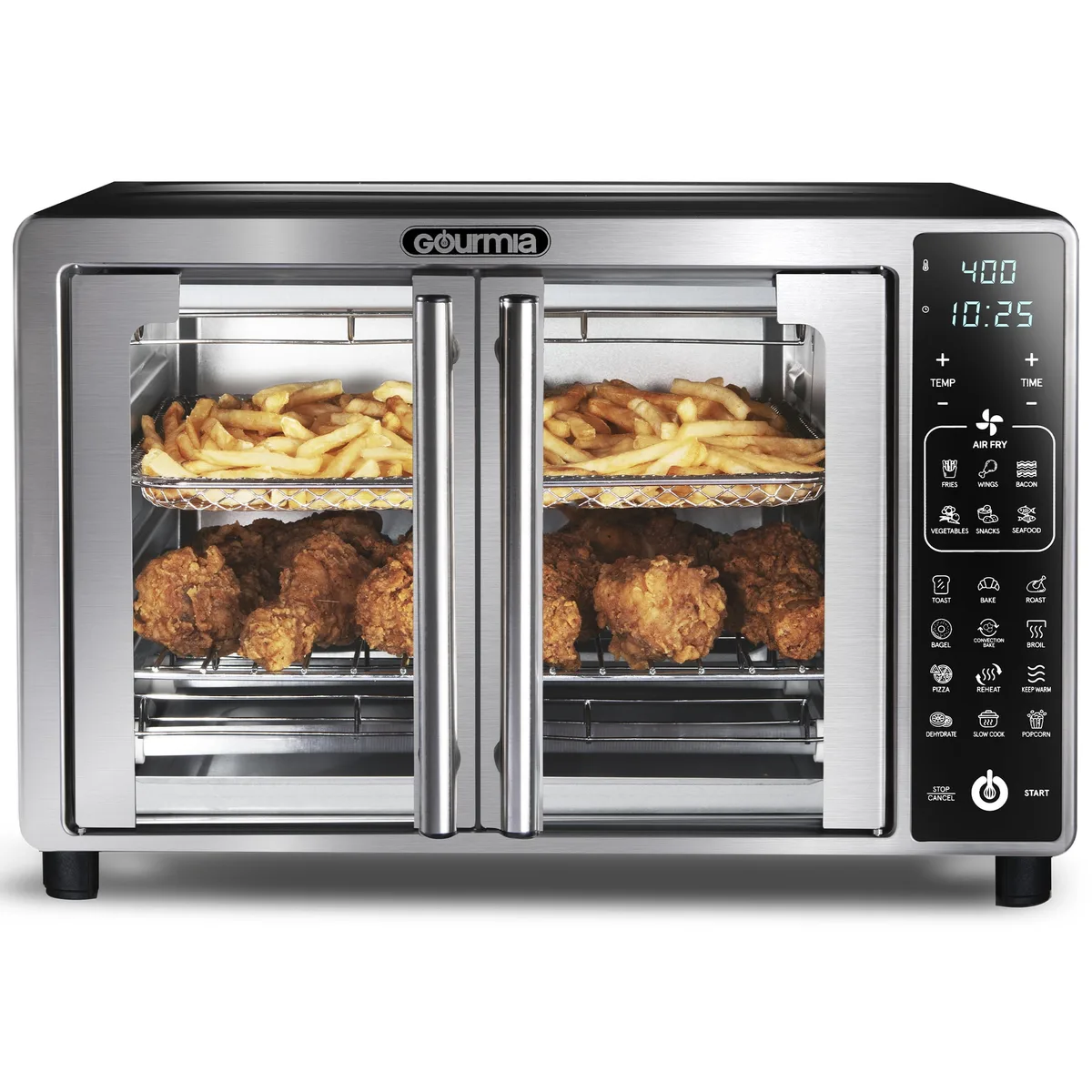
You can air fry french fries on two racks at the same time. Use an oven-style model with two rack positions. Preheat to 400°F and load both trays in single layers.
Swap the racks halfway through cooking. Add 30 to 50 percent extra time versus one rack.
Why Two Racks Cook Differently Than One (The Airflow Problem)
Every air fryer works the same basic way. A heating element warms the air, and a fan blasts it around the chamber. That makes each unit a compact convection oven with a very tight airflow loop.
Stacking two racks breaks that loop in one predictable spot. The upper tray sits right in the element's path, so it browns fast. The lower tray gets shielded from direct heat and depends only on circulating air.
Left alone, you'll pull one golden tray and one pale one every time.
Moisture is the second culprit. Two trays of fries release twice the steam, and trapped humidity softens the surface. That's why loading density matters even more on double batches than single ones.
The fix is mechanical, not complicated:
- Upper rack browns first because it's closest to the element
- Lower rack runs slower and paler without intervention
- Both trays crisp worse when piled past a single layer
Swap the racks halfway through and you cancel out the imbalance completely.
First Check: Can Your Air Fryer Even Hold Two Racks?
Open the manual and count the physical rack positions before anything else. If your unit shipped with two or more racks and has slots to hold them, you're set. If it came with one pull-out basket, jump straight to the alternatives below.
Basket-Style Models: The Hard Limit
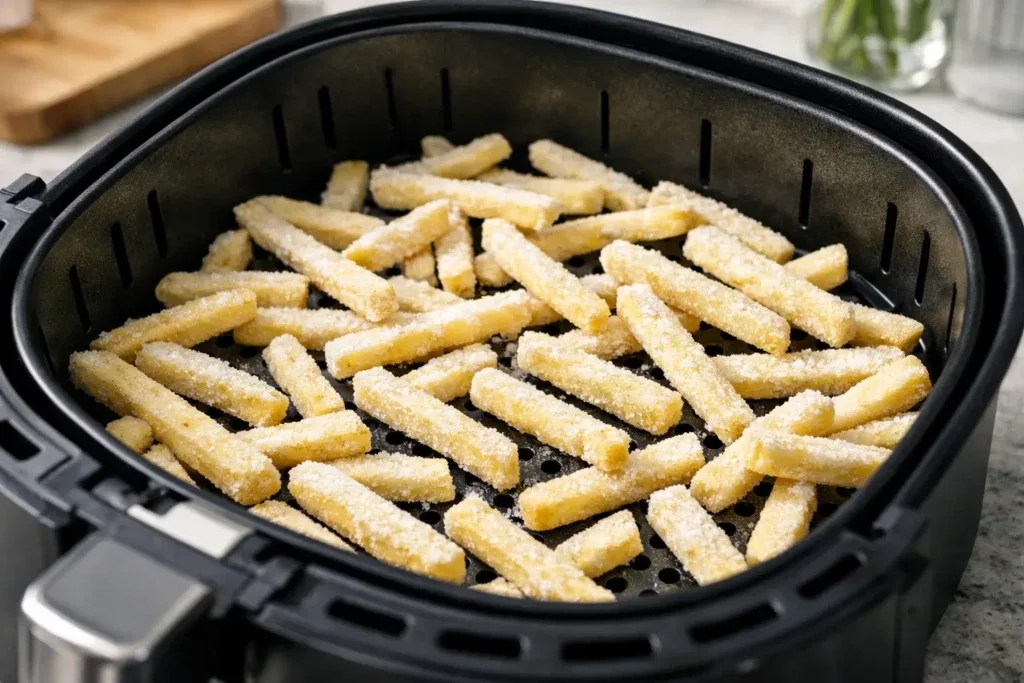
A drawer-basket air fryer can't hold two racks, period. The chamber is built around one perforated basket, and there are simply no slots for a second level. Don't improvise with foil racks or stacked trivets either.
Blocking the fan intake starves the whole chamber of airflow and stresses the motor.
If you own a basket model and want real double-batch capacity, dual-drawer units like the Ninja DoubleStack XL or Foodi DualZone solve it differently. They cook two independent zones side by side instead of stacking trays vertically. Our breakdown of basket versus oven designs walks through how the formats differ in daily use.
Oven-Style and Dual-Drawer Alternatives That Work
As of 2026, nearly every major brand sells an oven-style air fryer with multiple rack positions. Common examples include the Ninja Foodi Digital Air Fry Oven, Cuisinart TOA-65, Instant Omni Plus, Breville Smart Oven Air Fryer, and Cosori's 12-in-1 toaster oven. These ship with two wire racks and three to five position slots.
Run two checks before committing to a double load. First, confirm the manual explicitly supports two-rack air frying, since some brands recommend specific positions for certain modes. Second, eyeball the vertical clearance, because tall piles of fries on the top rack can scorch against the upper element.
One last detail people miss. Keep the crumb tray seated in its lowest slot. It catches oil drips that would otherwise smoke on the exposed element below.
How to Air Fry Frozen French Fries on Two Racks (Step by Step)
Frozen fries arrive par-fried in oil at the factory, so they need less added fat and less time than fresh cuts. That makes them the easiest starting point for two-rack cooking.
Follow this sequence:
- Preheat to 400°F for 3 to 5 minutes with both racks in place
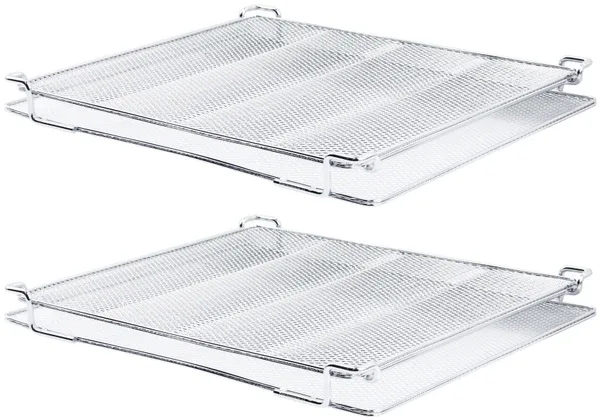
- Split the bag evenly across two perforated trays in a single layer with visible gaps
- Load lighter on the bottom, since that tray fights an uphill battle against physics
- Skip the oil spray unless you want extra color, because frozen fries already carry a factory coating
- Cook 18 to 24 minutes total, swapping the racks and shaking each tray at the halfway mark
- Check at 18 minutes for deep golden edges, then add 2-minute increments if needed
- Salt immediately after removal so it sticks to the hot surface
Lighter load on the bottom rack, always. Crowding the disadvantaged tray is the fastest route to soggy fries.
Cut thickness changes the clock. Adjust using this range:
| Frozen Fry Style | Two-Rack Time at 400°F |
|---|---|
| Shoestring | 16 to 20 minutes |
| Regular cut | 18 to 24 minutes |
| Steak cut or wedges | 22 to 28 minutes |
The same swap-and-shake routine carries over to plenty of other freezer-aisle favorites, including breaded fish sticks and shredded hash browns.
How to Air Fry Fresh-Cut Potatoes on Two Racks (Step by Step)
Fresh-cut fries taste better than frozen, but they demand prep discipline. Skip the soak or the drying step and no rack trick will save them.
Work through this order:
- Cut russet potatoes into 1/4-inch sticks, or 3/8-inch for thicker steak fries
- Soak in cold water for at least 30 minutes to pull surface starch, then drain and rinse
- Dry completely with clean towels, because wet potatoes steam instead of crisp
- Toss with 1 tablespoon of neutral oil per pound, coating every piece lightly
- Preheat to 400°F and load both racks in loose single layers, lighter on the bottom
- Cook 28 to 35 minutes, swapping racks and rotating each tray 180 degrees at the midpoint
- Salt the moment they land on the plate, while the surface oil is still hot and tacky
Yukon Gold works if you prefer a denser bite, though russets give you the fluffiest interior. Sweet potato fries run hotter and faster, so drop them to 380°F and start checking at 20 minutes.
Planning ahead helps here. Per USDA food safety guidance, peeled or cut potatoes can sit submerged in water in the fridge for up to 24 hours to prevent browning. That means you can soak in the morning and fry both racks at dinner without touching a knife again.
The Mid-Cook Rack Swap: The Move That Makes or Breaks Both Trays
The swap is the whole game. Halfway through cooking, you pull both racks, trade their positions, and rotate each tray 180 degrees. Every fry gets equal time near the element and equal time in the circulating zone.
Timing matters more than technique here. Set a separate timer for half your total cook window. A 22-minute frozen load gets swapped at 11 minutes, and a 30-minute fresh-cut batch gets swapped at 15.
Work through it in this order:
- Open the door fully and work fast to hold the heat
- Pull the top rack out with dry oven mitts and set it on a trivet
- Slide the bottom rack up, then seat the first tray underneath it
- Rotate each tray 180 degrees so the back edge now faces front
- Shake or toss the fries on both trays before reseating them
- Close the door immediately and restart your timer
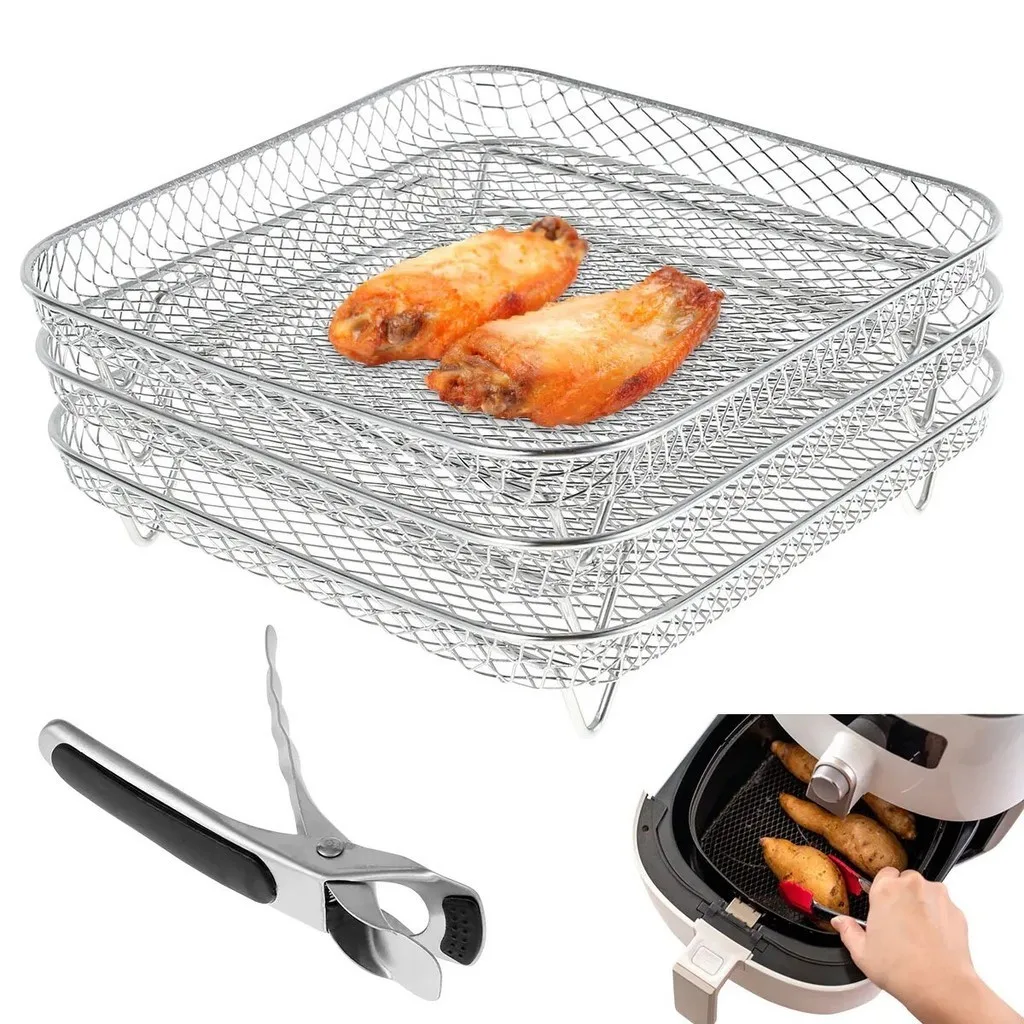
Why rotate and swap? Rear-mounted fans drive the hottest air across the back wall of the chamber. Rotation cancels that front-to-back gradient on top of the top-to-bottom one.
Follow your manual's listed rack positions if it specifies them. If the bottom tray still lags after a clean swap, give it 2 to 4 extra minutes alone while the finished tray rests under foil.
Two-Rack Timing Chart: Temps, Times, and Adjustments
Manufacturer specs and published recipe testing cluster around one working range. 400°F covers nearly every fry scenario, with sweet potato as the standing exception. Here's the full picture side by side.
| Fry Type | Temp | One Rack | Two Racks |
|---|---|---|---|
| Frozen shoestring | 400°F | 10 to 12 min | 16 to 20 min |
| Frozen regular cut | 400°F | 12 to 15 min | 18 to 24 min |
| Frozen steak cut or wedges | 400°F | 15 to 18 min | 22 to 28 min |
| Fresh-cut russet | 400°F | 20 to 25 min | 28 to 35 min |
| Sweet potato fries | 380°F | 15 to 18 min | 22 to 28 min |
A few adjustments fine-tune those numbers:
- Units under 1,500W tend to run toward the high end of each range
- UK and EU 230V models often finish 2 to 3 minutes ahead of US ratings
- Heavily loaded trays need a second shake at the three-quarter mark
- Dark edges with pale centers means drop the temp 25°F and stretch the time
Treat the chart as a starting window, not a promise. Your unit's wattage, rack spacing, and load size all nudge the finish line a few minutes in either direction.
Common Mistakes That Leave You With Soggy or Burnt Fries
Most two-rack failures trace back to a handful of repeat offenders. Each one has a simple fix.
Why Do My Fries Steam Instead of Crisp?
Overcrowding is almost always the cause. Piled fries trap their own moisture, and trapped steam softens the surface instead of crisping it. Spread them into a single layer with visible gaps, even if it means shaving a few fries off each tray.
The rest of the usual suspects:
- Skipping the preheat: a cold chamber adds minutes and blotchy browning
- Trusting single-rack times: pulling at 14 minutes leaves the bottom tray raw inside
- Skipping the swap: you'll get one golden tray and one limp one, every time
- Wet potatoes hitting the oil: surface water flashes to steam and kills the crust
- Loose parchment sheets: they lift into the element mid-cook, so weight them down or skip them
- Aerosol nonstick sprays: the lecithin gums up coatings and smokes at high heat
- Constant door peeks: every opening dumps heat and stretches the cook
Fix the loading density and commit to the swap, and you've eliminated the two causes behind most soggy results. Everything else on that list is a one-time correction.
Two Racks vs. Sequential Batches vs. Dual-Drawer Fryers
There are three ways to put 2 pounds of fries on the table. Each fits a different kitchen, so pick based on the gear you already own.
| Method | Total Time (2 lbs frozen) | Evenness | Best For |
|---|---|---|---|
| Two stacked racks | 18 to 24 min | Very good with swap | Oven-style owners |
| Sequential basket batches | 26 to 32 min | Excellent | Basket-model owners |
| Dual-drawer zones | 18 to 25 min | Excellent | Nightly big-batch cooks |
Stacked racks win on speed and cleanup for anyone who already owns an oven-style unit. One preheat, one cycle, one tray wash. The tradeoff is vigilance, because the swap step isn't optional.
Sequential batches suit basket-model owners who don't want new gear. Just run two rounds back to back and shave a minute off the second batch, since the chamber starts hot. It's slower, but the results stay consistent.
Dual-drawer units like Ninja's dual-zone lineup sidestep the airflow problem entirely by cooking two independent chambers side by side. They cost more upfront, though verified buyer feedback consistently favors them for households doing large batches several nights a week. Energy-wise, all three methods beat firing up a wall oven, which you can see in the real power draw of typical countertop units.
Pro Tips for Loading, Seasoning, and Serving Both Trays Hot
Small habits separate decent double batches from restaurant-level ones. These are the ones worth stealing.
- Dust fresh cuts with cornstarch, about 1 teaspoon per pound, for a shatter-crisp shell
- Split the seasoning: cajun rub on one tray, salt-only on the other, plain for picky kids
- Hold the finished tray in a 200°F conventional oven or under a foil tent while tray two finishes
- Salt within 30 seconds of removal, while the surface oil is still tacky enough to grip
- Warm your plates for 2 minutes in the cooling fryer so fries don't die on contact
The same two-rack routine scales beyond fries, too. Once you've got the swap rhythm down, a fast batch of tortilla chips or homemade croutons ride both levels just as easily. Any thin, dry snack that likes moving air will treat two racks the same way fries do.
Safety Notes for Mid-Cook Rack Swaps and Parchment Use
Two-rack cooking means twice the hot metal moving around, so a few precautions earn their keep. The chamber interior sits at 400°F or higher during a swap, and dry oven mitts are non-negotiable. Damp mitts transfer heat instantly through steam.
Watch these specific hazards:
- Steam burns on opening: crack the door away from your face, since trapped vapor escapes upward first
- Loose parchment: never preheat with an unweighted sheet inside, because circulating air lifts it into the element and ignites it
- Aerosol sprays: skip them entirely, since lecithin residue builds up on elements and smokes at high heat
- Blocked vents: leave the manufacturer-specified clearance behind and above the unit, and never run it flush against a cabinet
Only use appliances that carry UL or ETL listing to the household electric cooking standard, which CPSC guidance reinforces for countertop cooking gear generally. And if you're wondering about paper liners or plates, our paper plate safety rundown covers what belongs inside and what never does. After cooking, unplug the unit and let it cool fully before pulling the crumb tray for cleaning.
Frequently Asked Questions
Can any air fryer cook fries on two racks?
No. Only oven-style units with multiple rack slots can hold two levels at once. Basket-style models physically lack the positions, so run sequential batches instead of improvising with foil stacks.
Do french fries take longer on two racks than one?
Yes, expect 30 to 50 percent more time. Frozen regular-cut fries jump from roughly 12 to 15 minutes on one rack to 18 to 24 minutes across two. The swap step plus the extended window keeps both trays even.
Which rack gets more fries?
Load the bottom rack lighter. It cooks slower because the top tray shields it from direct element heat. A 60/40 split toward the top evens out the finish time between trays.
Can I cook two different foods on separate racks?
Yes, as long as both need the same temperature. Fries on one level and crispy chicken sausage on the other works well together. Just swap positions at whichever food's halfway point comes first.
How many fries fit on two racks at once?
About 2 pounds total, or 1 pound per tray. That serves six to eight people as a side. Push past that and crowding steams the middle layers no matter how good your technique is.
Why are my bottom-rack fries still pale after swapping?
Either the swap came late or the trays were overloaded. Swap at the exact midpoint next time, shake both trays thoroughly, and give the lagging tray 2 to 4 extra solo minutes under foil-topped company.
Final Decision Guide: Your Setup, Your Best Method
Match your equipment to the right path and the result takes care of itself. Here's the whole article compressed into three branches:
- If you own a basket-model air fryer → run two sequential batches, shave a minute off round two, and skip the rack experiment entirely
- If you own an oven-style unit with two or more racks → use the stacked method: 400°F preheat, single-layer loads weighted toward the top, mandatory midpoint swap, 18 to 24 minutes frozen or 28 to 35 fresh
- If you cook big batches several nights a week → dual-drawer zones like Ninja's DualZone eliminate the swap step by design, and the premium pays back in routine convenience
Whichever branch you land on, the fundamentals stay identical. Single layers beat piles, the swap beats patience, and salting straight off the heat beats seasoning later. Get those habits down once and every future double batch runs itself.