Okay, you've got a box of cold, sad fries staring at you. The microwave is tempting, but you already know how that ends. So let's fix the real problem: how to reheat leftover french fries in air fryer toaster oven so they taste like they just came out of the fryer.
The key is dry heat, high temperature, and a little patience. As of 2026, air fryer toaster ovens have become the go-to appliance for reviving leftovers, and for good reason. USDA food safety guidelines say reheated leftovers should hit an internal temperature of 165°F, and most toaster ovens with convection fans can do that fast without turning your fries into rubber.
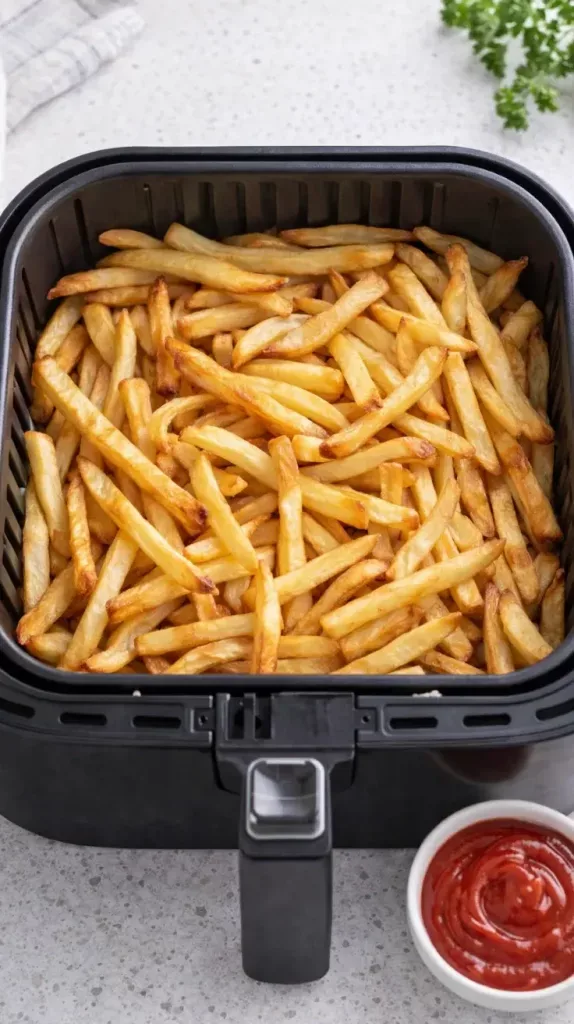
Image source: Bing (Web (fair-use with source credit))
Why Leftover Fries Go Soggy (And Why the Microwave Is the Culprit)
Let's talk about what happens between the fryer and your fridge. French fries have a crispy, dehydrated outer shell and a soft, starchy interior. When you store them, moisture from the inside slowly migrates into that shell.
Refrigeration speeds this up.
Then you hit them with the microwave. Microwave heating works by exciting water molecules, which creates steam. That steam soaks straight into the fry coating, leaving you with limp, pale, sad sticks.
The microwave is the fastest way to ruin leftover fries, and most of us have done it at least once.
There's also a starch reaction at play. When cooked fries cool, the starches begin to recrystallize. That's called retrogradation, and it's why cold fries turn dense and slightly hard.
You need heat to break those crystals down again, but it has to be dry heat. Convection is the only appliance-level method that does both: re-melts the interior and evaporates the crust moisture.
If you want a deeper compare of heating methods, our breakdown of the microwave versus air frying shows exactly why one steams and the other crisps.
The Quick Answer: 400°F, 3 to 8 Minutes, and a Single Layer
Preheat your air fryer toaster oven to 400°F. Spread fries in a single layer. Heat for 3 to 8 minutes, shaking halfway.
Thin fries need 3 to 4 minutes. Thick steak fries need 6 to 8 minutes. That's the whole method.
| Fry cut | Temperature | Time | Shake |
|---|---|---|---|
| Shoestring | 400°F | 3–4 minutes | Once at 2 minutes |
| Regular crinkle-cut | 400°F | 4–5 minutes | Once at 2 minutes |
| Waffle fries | 400°F | 5–6 minutes | Once at 3 minutes |
| Steak fries | 400°F | 6–8 minutes | Once at 3 minutes |
The exact timing depends on your toaster oven wattage and whether the fries are fridge-cold or frozen. But the baseline is always the same: hot air, moving fast, on one even layer.
How an Air Fryer Toaster Oven Re-Crisps Fries Without Extra Oil
An air fryer toaster oven works like a small convection oven. A heating element warms the air, and a fan pushes it around the cooking chamber at high speed. That circulating hot air pulls moisture off the surface of the fries, which re-dries the coating back to a crisp shell.
You don't need oil for this to work. The fries already have residual oil from their first fry, and that's enough. Adding a light spray can help if the fries look especially dry, but a quick spritz is all you need.
What makes a toaster oven different from a dedicated basket air fryer is the cooking volume. A toaster oven has more interior space and typically uses a larger fan, which means more even airflow across a wider surface. That helps if you're reheating a full portion rather than a handful.
If you're curious how the two compare in practice, our take on dedicated basket air fryers versus toaster ovens explains the trade-offs.
The other advantage is dry heat from multiple directions. The heating elements sit above and sometimes below the tray, so the bottom of each fry gets crisped too. A microwave just can't do that.
A standard convection oven can, but it takes twice as long and heats up your whole kitchen. The air fryer toaster oven sits somewhere between, giving you convection oven results in a fraction of the time and with a fraction of the energy use.
The Decision Tree: Match the Reheat to the Fry Type
Not all fries are the same, and treating a shoestring like a steak fry is a recipe for charcoal. So use this simple decision tree. If your fries are thin and delicate, go short and hot.
If they're thick and chunky, give them more time and maybe a slightly lower temp for the first few minutes.
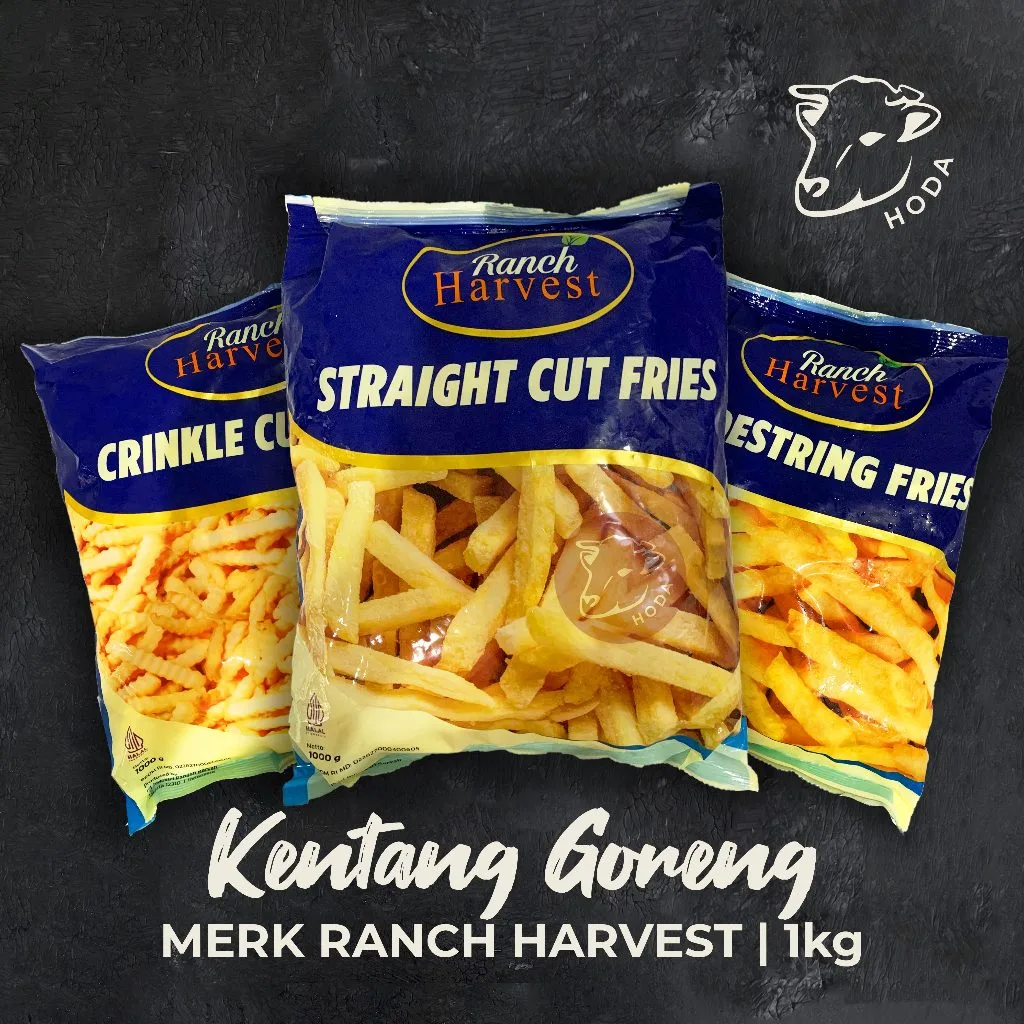
Image source: Web (Bing) / shopee.co.id (Web image (fair-use with source credit))
| Fry type | Best approach |
|---|---|
| Shoestring or thin-cut | 400°F for 3–4 minutes, one shake |
| Crinkle-cut or standard fast-food | 400°F for 4–5 minutes, one shake |
| Waffle or curly | 400°F for 5–6 minutes, flip halfway |
| Steak or thick-cut | 400°F for 6–8 minutes, shake at 3 minutes |
| Sweet potato | 390°F for 4–5 minutes, watch for dark spots |
| Loaded or cheesy | Reheat the base first, add toppings after |
Shoestring and Thin-Cut Fries: 3–4 Minutes, One Shake
Shoestring fries are small and dry out fast. They'll go hard and brittle if you leave them in too long. Start with 3 minutes, shake once, and check.
They should feel crispy on the outside and soft inside. If they're still waxy in the middle, give them 30 more seconds, no more.
Crinkle-Cut and Regular Fast-Food Fries: 4–5 Minutes
This is the standard reheat territory. Crinkle-cut fries have more surface area and a bit more thickness, so they can handle a little longer. You should shake them once at the 2-minute mark.
If you're reheating fries from a restaurant that's been sitting in the fridge for a day or two, add a quick 30-second burst at the end.
Steak Fries and Thick-Cut Wedges: 6–8 Minutes
Thick fries take the longest because the interior needs more time to come back to temperature. The outside will look ready after 4 minutes, but the middle will still be cold. Let them run the full 6 to 8 minutes.
If they start browning too fast on the edges, drop the temp to 375°F for the last few minutes.
Waffle Fries and Curly Fries: 5–6 Minutes
These are trickier because they have uneven surfaces. Waffle fries have deep pockets that catch heat differently, while curly fries have a seasoned coating that can burn. Flip them once instead of shaking, and peek at the color.
When the edges are golden with no dark spots, they're done.
Sweet Potato Fries: Quick Reheat, Watch for Burn Spots
Sweet potato fries have a higher sugar content, so they burn faster. Keep the temp at 390°F and check them at the 3-minute mark. Most batches only need 4 to 5 minutes total.
If you see any charred edges forming, pull them out early. They'll finish cooking from residual heat.
Loaded or Cheesy Fries: Reheat Toppings Separately
If your leftovers are loaded with cheese, bacon, or chili, don't reheat the whole tray at once. Cheese can burn, and cold toppings don't warm evenly. Instead, reheat the bare fries for 4 to 5 minutes, then add the cheese and pop it back in for 60 seconds.
For frozen leftovers, the process is a bit different. The same logic applies to frozen hash browns, which also need an extra initial blast to thaw before crisping.
Step-by-Step: Reheating Leftover Fries in an Air Fryer Toaster Oven
Here's the exact workflow, from fridge to plate, no guesswork.
- Preheat the toaster oven to 400°F. Most air fryer toaster ovens take 2 to 3 minutes to reach full heat. Starting cold means the fries warm up slowly, which gives moisture time to sink back into the coating.
- Pull the fries out of the fridge and let them sit for 5 minutes. This takes the chill off, so they don't spend extra time just warming up.
- Spread them in a single layer on the air fryer tray or basket. Overlapping is the number one killer of crispness. If you have more than fits, run two batches. They'll still beat the microwave.
- Optional: give them a light mist of oil. A quick spray with a pump oil mister adds a thin layer that helps the crust get golden. Skip the aerosol non-stick sprays, they can damage the coating on some trays.
- Set the timer for the right range based on your fry type. For thin fries, start at 3 minutes. For thick steak fries, start at 6.
- Shake or flip halfway through. Use tongs or just pull the tray out and give it a toss. That rotates the fries so the bottom sides get the same blast of hot air.
- Check for crispness. Tap a fry. It should sound hollow and feel dry on the surface. If it bends without snapping, give it one more minute.
- Season after reheating. Salt, pepper, or spices stick better to the re-crisped surface once it's hot. Tossing them in a bowl with your seasoning gets even coverage.
- Let them rest for 1 minute. This isn't about the fries. It's about letting the steam escape from the surface so they stay crispy longer.
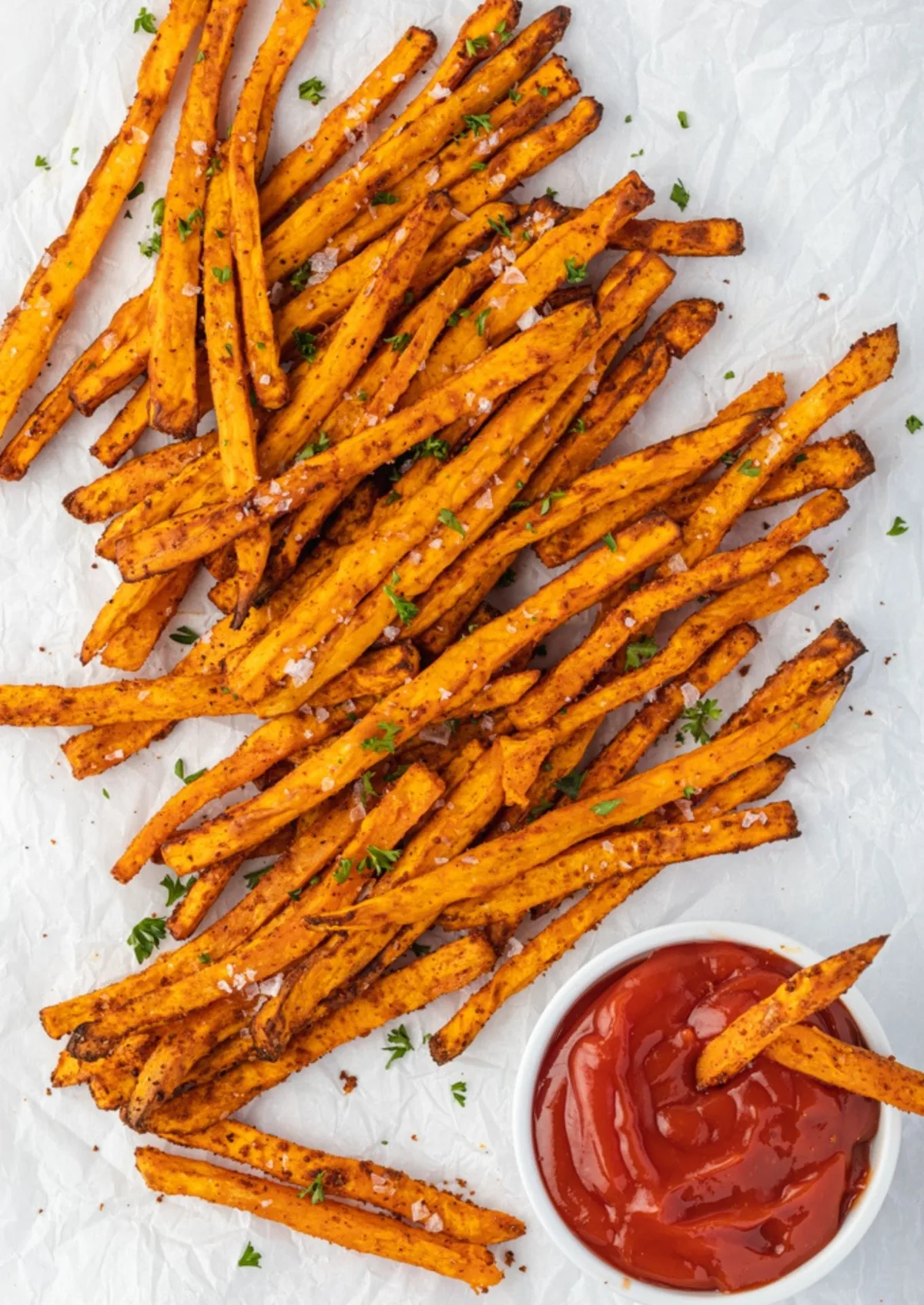
Image source: Web (Bing) / storage.googleapis.com (Web image (fair-use with source credit))
One note on capacity. A 12-slice toaster oven can handle a generous portion in a single layer, but a 6-slice model can't. Plan for two smaller batches instead of one overcrowded disaster.
You'll also want to consider how much electricity are actually drawing while that fan runs. Air fryer toaster ovens are more efficient than full ovens, but they still pull noticeable wattage during a 2 to 8 minute cycle.
Fridge-Cold vs. Frozen Leftovers: Does Starting Temperature Change Your Time?
Yes, but not by much. Fridge-cold fries go straight into a preheated 400°F toaster oven. Frozen leftover fries need an extra 2 to 3 minutes.
That's the whole difference.
The trick is to freeze fries flat on a tray first, so they don't clump into a solid mass. If they're already stuck together, break them apart gently before reheating. For frozen batches, one useful approach is to run them first at 350°F for 2 minutes to let the interior warm, then kick it up to 400°F to re-crisp the surface.
Per USDA guidelines, any reheated leftover should reach 165°F internally before serving. That goes for fries too, even if they look brown and hot. Most air fryer toaster ovens hit that well within the time ranges already listed.
Batch Size and Basket Capacity: Why Overcrowding Ruins the Crunch
Crispness comes from airflow. The more fries you pile onto the tray, the less the hot air can reach each surface. Overlapped fries steam each other from the sides, and steam is exactly what you've been trying to avoid.
Aggregate reviews and manufacturer specs confirm the same rule: a single layer fits roughly 1.5 to 2 cups of fries in a 6-slice toaster oven, up to 3 cups in a 12-slice. If you have more, run two batches. It costs an extra 4 minutes and it always beats eating half-crisp, half-limp fries.
A good habit is to toss the fries halfway through. That rotates the pieces on the edges toward the center, so every fry gets its turn in the hottest airflow. It takes 10 seconds and makes a bigger difference than any seasoning or oil trick.
Common Mistakes That Turn Fries Chewy, Soggy, or Burnt
Most reheating failures fall into a few repeatable mistakes. Once you know them, you'll stop fighting the machine and start trusting the timer.
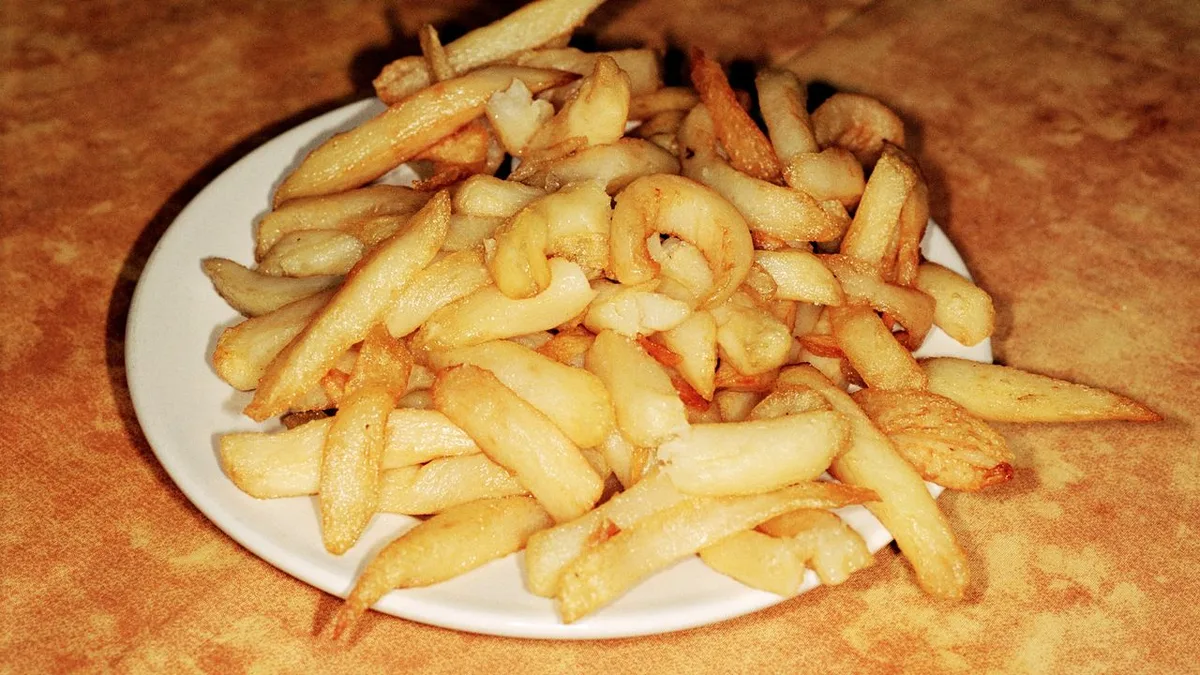
Image source: Web (Bing) / storage.googleapis.com (Web image (fair-use with source credit))
- Skipping the preheat. A cold chamber warms the fries slowly, letting moisture sink back into the coating.
- Overloading the tray. This is the top reason for soggy results across thousands of user reports.
- Using the microwave first. Once fries get steamed, an air fryer can't fully restore the crisp shell.
- Shaking too gently. You need to actually flip or toss the fries, not just nudge the tray.
- Forgetting the sugar. Sweet potato fries and honey-coated varieties burn at 400°F. Drop to 390°F and watch them closely.
- Reheating loaded fries with cold toppings. Cheese and chili insulate the fries and create steam pockets underneath.
If you've already got a rubbery batch from the microwave, there's still a salvage path. Toss them into the toaster oven at 425°F for 2 minutes exactly. It won't be perfect, but it's noticeably better.
Troubleshooting: Fixing Undercooked, Overcooked, or Already-Soggy Fries
If your fries are still limp after the recommended time, the fix isn't more heat. It's less crowding. Check the tray first.
If every fry is touching its neighbors, split the batch in half and give it 90 seconds more.
If they're burning on the edges but cold in the middle, your fries are either very thick or your toaster oven runs hot. Drop the temperature to 375°F and add 2 minutes. Many toaster ovens have hot spots near the heating elements, so rotating the tray is worth doing.
If smoke pours out mid-cycle, the culprit is usually residual oil dripping onto the hot heating elements or the crumb tray. Pull the tray, wipe off the buildup, and continue. If fries taste dry and hollow, they overheated.
Next time, cut the time by a minute rather than lowering the temperature, since a lower temp makes them cook slower without crisping.
For fries that arrive at the fridge already soggy, per manufacturers' guidance the only reliable move is a hotter, shorter blast. 425°F for 2 to 3 minutes will drive off surface moisture before the interior dries out.
Air Fryer Toaster Oven vs. Skillet, Regular Oven, and Dedicated Air Fryer
You have options. The skillet works well for small batches, but it adds oil and requires attention. The regular oven can handle large quantities, but it takes 10 to 15 minutes and heats up the whole kitchen.
A dedicated basket air fryer is fast, yet its smaller footprint limits batch size.
| Method | Batch size | Time | Crispiness | Effort |
|---|---|---|---|---|
| Air fryer toaster oven | Medium | 3–8 min | Excellent | Low |
| Basket air fryer | Small | 3–5 min | Excellent | Low |
| Skillet | Small | 5–7 min | Good | High |
| Regular oven | Large | 10–15 min | Good | Medium |
| Microwave | Any | 1–2 min | Poor | None |
An air fryer toaster oven wins for most home kitchens because it balances capacity, speed, and cleanup. It also doubles as a countertop oven for other tasks, which makes it a better purchase for households that cook varied meals. If you already run a full convection oven setup, you can get similar results by using convection mode, but you'll pay for it in preheat time and electricity.
Safety, Smoke, and Cleaning: Protect Your Toaster Oven and Your Kitchen
Oil drips cause most smoke issues. When reheated fries shed leftover oil, it lands on the crumb tray or heating elements and burns. Pull the tray and wipe it down after every batch.
Aerosol non-stick sprays are the other culprit. They contain lecithin and propellants that leave a sticky film on coated baskets over time. A pump oil mister is safer for the appliance and your food.
Never leave the toaster oven running while you step away. Keep it clear of curtains, paper towels, and plastic utensils. The heating elements get hot enough to ignite anything touching them.
Plug the unit directly into a wall outlet, not an extension cord.
FAQs About Reheating Leftover Fries in an Air Fryer Toaster Oven
Can I reheat fries more than once?
Technically yes, but quality drops fast. Each cycle drives out more moisture. By the second or third round, fries turn dry and hollow.
Reheat only what you plan to eat.
Why are my fries still pale and soft?
That's usually an overcrowded tray or a skipped preheat. Fries need room for hot air to circulate. Split the batch in half and run them hotter for less time.
Should I spray oil on the fries first?
Only if they look dry. Most leftover fries carry enough residual oil from the original fry. A light mist from a pump sprayer helps if the coating seems dull.
Too much oil just makes them greasy.
Are frozen leftover fries reheated differently?
Yes, slightly. Add 2 to 3 minutes and start at 350°F for the first 2 minutes. Then bump to 400°F to re-crisp the surface.
The Final Verdict: Your Personal Reheat Cheat Sheet
Here's the whole method in one glance.
| Fry type | Temp | Time | Shake |
|---|---|---|---|
| Thin-cut | 400°F | 3–4 min | Once |
| Crinkle / fast-food | 400°F | 4–5 min | Once |
| Waffle / curly | 400°F | 5–6 min | Once |
| Steak / thick | 400°F | 6–8 min | Once |
| Sweet potato | 390°F | 4–5 min | Once |
Preheat, single layer, shake halfway. Skip the microwave, keep the tray uncrowded, and your leftover fries will taste close to the original batch, minus the drive-through window. As of 2026, that's the best available method for a quick, reliable reheat.