There's a problem with baking cookies in an air fryer toaster oven. You want that chewy center and crisp edge, but the cookies either spread into one flat pancake or burn on the bottom while the top stays raw. If you've searched how to bake chocolate chip cookies in air fryer toaster oven, you already know regular oven directions don't translate.
The good news? It's not your baking skills. It's the appliance.
As of 2026, most countertop air fryer toaster ovens run between 1500 and 1800 watts and circulate hot air fast. That changes everything about timing and temperature. The fix comes down to one decision: how you set up the bake.
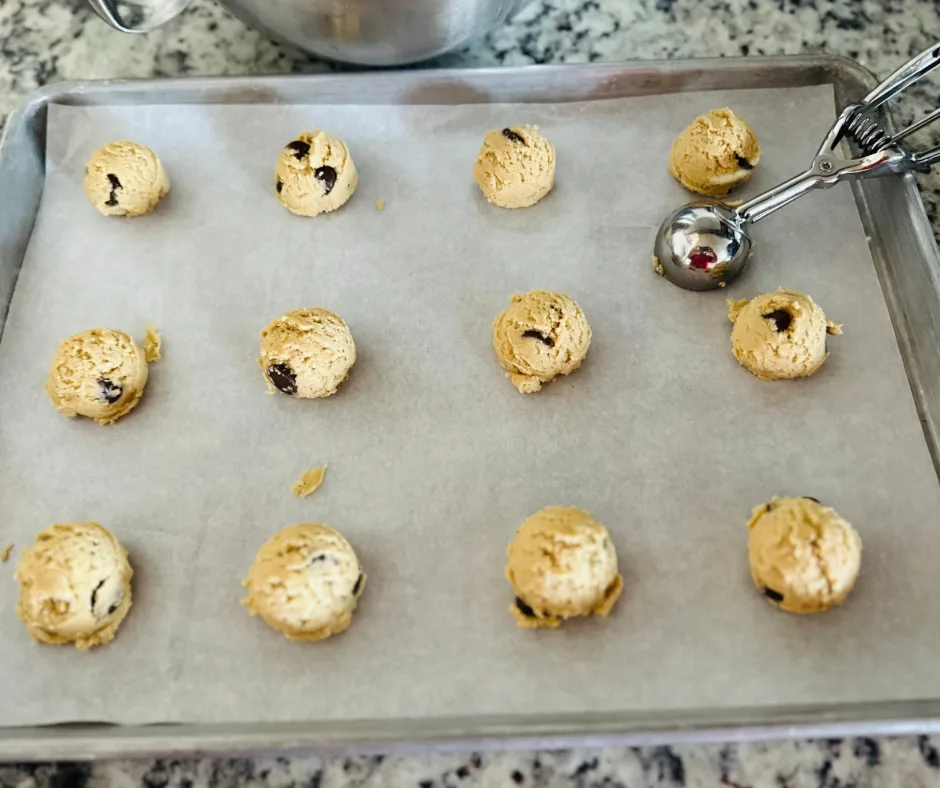
Image source: Web (Bing) / storage.googleapis.com (Web image (fair-use with source credit))
Quick Answer
Preheat your air fryer toaster oven to 325°F. Place dough balls on a parchment-lined tray. Space them at least two inches apart.
Bake for 8 to 12 minutes. Rotate the tray halfway through. Cool on the tray for two minutes.
Why Your Cookies Turn Out Wrong in an Air Fryer Toaster Oven
Why does the same recipe that works in a full oven fall apart here? The air fryer toaster oven is a small, sealed box with a fan that moves hot air constantly. That air blasts the cookie's surface, sets the edges fast, and pulls moisture out quickly.
If your oven runs hot, the bottom burns before the middle sets. If the dough is too warm, it spreads into a thin disc. And if the tray is crowded, the circulator can't do its job.
Here's the mental shift: you're not baking in an oven anymore. You're baking in a wind tunnel. Every decision, from dough temperature to tray placement, changes how that wind hits the cookie.
If you've wondered how convection baking compares to a standard oven, cookies show the difference fastest. The same dough that bakes tall and soft at 350°F in a conventional oven will flatten and brown too fast under a 350°F convection fan.
How Convection Baking Works in a Toaster Oven: Why It's Different
The physics is straightforward. A heating element warms the air. A fan pushes that air around the cooking chamber.
In a full-size convection oven, the chamber is big, so the air has room to circulate. In a toaster oven air fryer, the chamber is tiny. The same volume of air moves around much faster.
That raises the effective heat near the cookie's surface.
The result: cookies bake 20 to 30 percent faster than the classic recipe suggests. They also brown unevenly if you don't rotate the tray. The bottom, which sits close to the heating element, can overheat.
The top can look pale while the underside is already dark brown.
The key is to treat the cooking process as a two-sided problem. You need to slow the direct heat hitting the bottom and let the air finish the top. That's why parchment paper or a silicone mat matters.
It adds a heat buffer between the metal tray and the dough.
These units generally pull 1500 to 1800 watts, which is why knowing how many watts these units use helps you plan around breaker loads in a small kitchen.
Decide Your Starting Point: Fresh Dough, Chilled Dough, or Frozen Dough
Your dough's temperature tells you how to bake it. That's the most important decision in the whole process. Here's the breakdown.
Fresh Dough at Room Temperature
This spreads fastest. It's fine if you want a thin, crisp cookie. But in an air fryer toaster oven, it's risky.
The fan pushes it into a puddle. Drop the temperature to 325°F and check at minute eight.
Chilled Dough
This is the safest starting point. A 30-minute rest in the fridge stiffens the butter and slows the spread. You'll get a thicker, chewier cookie.
Bake it at the same temperature and the center sets better.
Frozen Dough
Frozen dough works great, but the timing changes. You'll need an extra three to five minutes. Bake at 325°F to avoid a frozen center and a burned bottom.
No need to thaw first.
| Dough State | Spread Risk | Bake Time at 325°F | Best For |
|---|---|---|---|
| Room temperature | High | 8–9 minutes | Thin, crisp cookies |
| Chilled | Low | 9–11 minutes | Thick, chewy cookies |
| Frozen | Very low | 12–14 minutes | One-off small batches |
No matter which dough state you pick, treat raw flour as a raw ingredient. The USDA recommends no one tastes raw dough before baking, because flour can carry pathogens. USDA food safety guidance covers the details.
If you're using pre-made frozen dough, the same logic applies to frozen ingredients to cook quickly. The timing shift just takes getting used to.
Choose Your Setup: Basket vs. Rack vs. Perforated Tray
Your air fryer toaster oven probably came with two cooking surfaces. One is a wire rack. The other is a perforated air fryer basket.
Both work, but they're not the same for cookies.
The wire rack has wide gaps. Dough can slump through unless you line it. The basket has small holes that let air rise from below.
That means more bottom heat, which is great for fries but not for cookies.
The best setup is honestly the tray insert if your model has one. It's a shallow, flat pan with low sides. It gives cookies a solid surface with a small rim.
If you only have a rack, line it with parchment paper. If you only have a basket, line it too, and expect the edges to crisp faster.
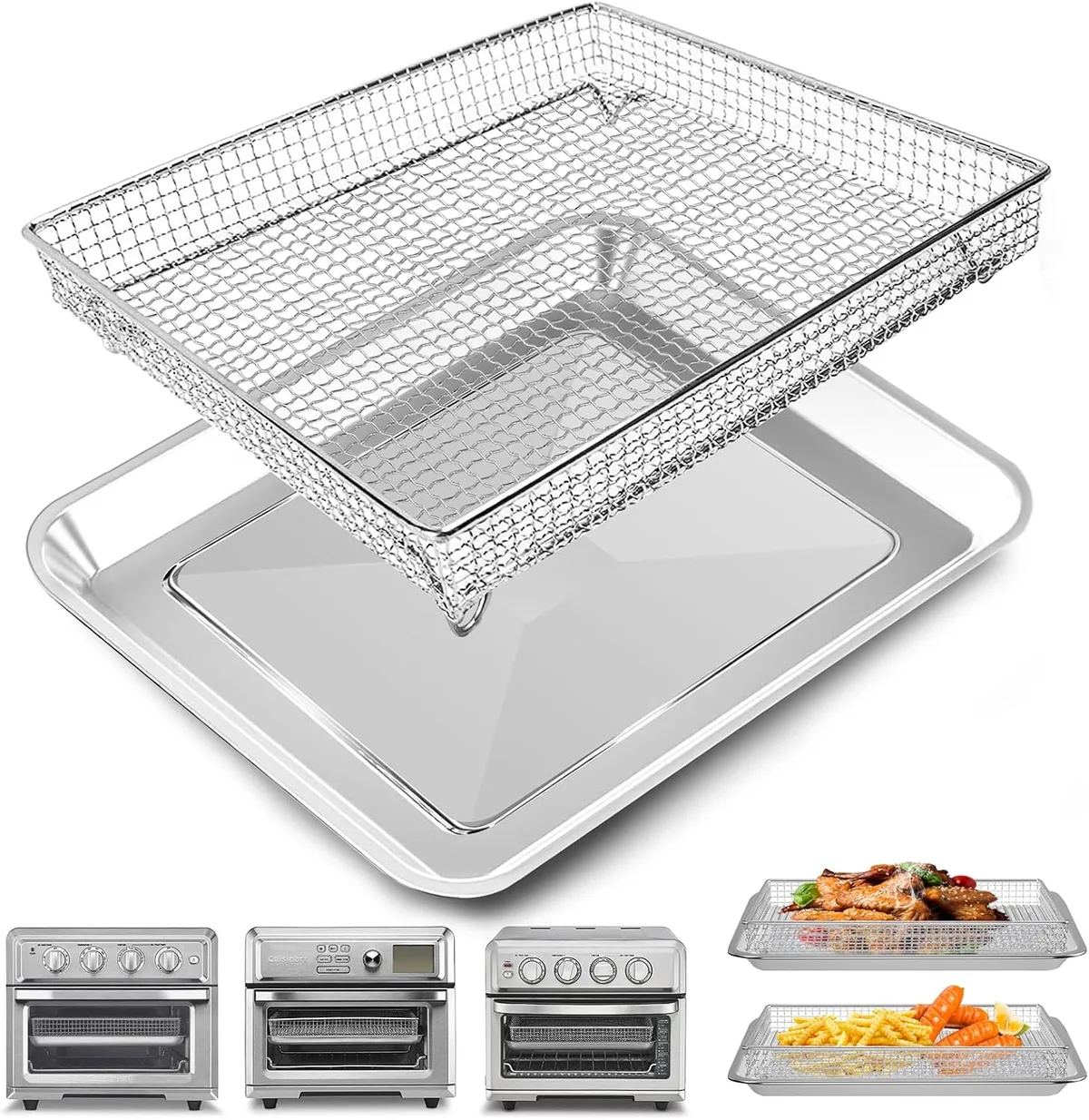
Image source: Web (Bing) / amazon.com (Web image (fair-use with source credit))
| Surface | Bottom Browning | Cookie Shape | When to Use |
|---|---|---|---|
| Wire rack with parchment | Moderate | Good, some airflow gaps | Great all-rounder |
| Perforated basket | High | Thin, crispy | Crispy-edged cookies |
| Solid tray insert | Low | Thick, soft | Soft-batch style |
Parchment paper acts as your heat shield. Use a piece that fits flat inside the tray or basket. Don't let it hang over the sides, because it can touch the heating element.
And keep the size small enough to avoid restricting airflow.
If you're worried about paper in the unit, this useful guide covers whether you can put paper products in an air fryer. The main rule is the same: keep paper away from the heating elements.
The Step-by-Step Air Fryer Toaster Oven Cookie Workflow
Here's the sequence that works consistently across most models. It's simple once you've done it a few times.
- Preheat to 325°F. Give it a full five minutes. A shorter preheat means the first batch bakes in a cooler oven than the second batch.
- Portion the dough. Use a cookie scoop or spoon. Keep each ball about 1.5 tablespoons. That's roughly the size of a golf ball.
- Chill the dough. Even ten minutes in the fridge helps. Thirty is better. This is the single most effective way to control spread.
- Line the tray. Cut parchment to fit the tray or basket. Don't let it touch the heating elements on the sides or top.
- Arrange the dough. Place four to six balls at least two inches apart. The fan needs space to circulate around each cookie.
- Bake for 8 to 12 minutes. Check at the 8-minute mark. Look for golden-brown edges and a set center.
- Rotate the tray at the halfway point. Most toaster ovens have a hot spot in the back. Turning the tray gives you even browning.
- Cool on the tray for 2 minutes. The cookies finish setting off direct heat. Then move them to a wire rack.
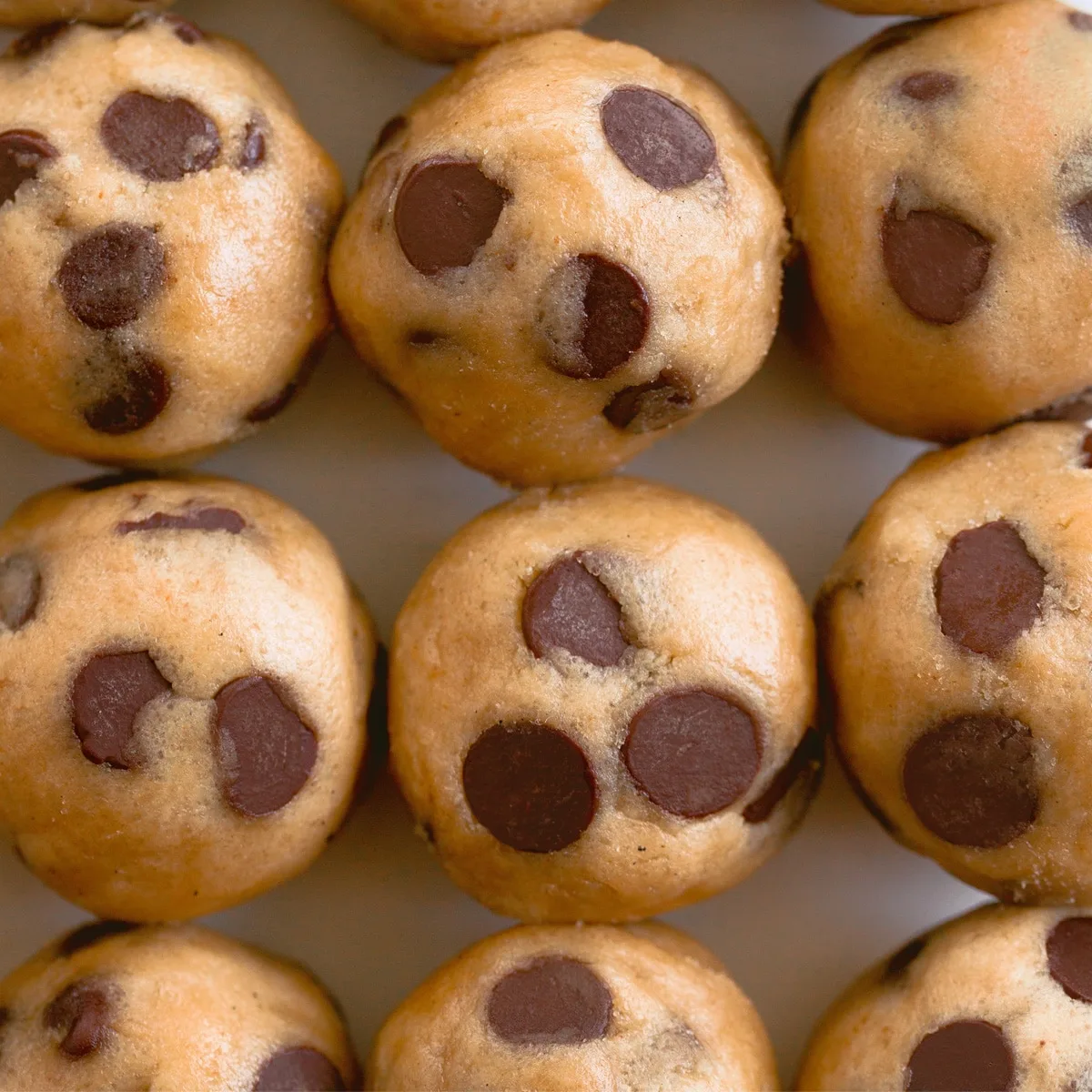
Image source: Web (Bing) / chocolatecoveredkatie.com (Web image (fair-use with source credit))
Use the bake function, not the air fry setting. Air fry mode blows harder and accelerates browning. You'll get a burnt bottom before a set center.
If your unit only has one mode, lower the temperature to 315°F and expect a shorter bake time.
Temperature and Time Cheat Sheet (by Dough State)
Temperature and time aren't fixed numbers. They shift with your dough's starting point and your specific model. Use this as your baseline, then adjust from there.
| Dough State | Temperature | Time | Rotate At | First Check |
|---|---|---|---|---|
| Room temperature | 325°F | 8–9 min | 4 min | 8 min |
| Chilled (30 min+) | 325°F | 9–11 min | 5 min | 9 min |
| Frozen | 325°F | 12–14 min | 6 min | 12 min |
| Jumbo (2 tbsp+) | 325°F | 12–15 min | 6 min | 12 min |
Model size matters. A smaller 4-quart unit runs hotter because the heating element sits closer to the food. A larger toaster oven with a slow fan might need the full end of that time range.
Compare how these countertop combos differ before you assume your unit behaves like everyone else's. Some six-slot toaster ovens need a 15-degree bump. Others run hot right out of the box.
Make the Call: Cookies Too Flat, Too Dry, or Underdone
You'll know something went wrong the moment you open the door. Here's how to fix each result on the next batch.
If your cookies spread into thin, crispy pancakes: the dough was too warm. Chill it for a full 30 minutes next time. You can also increase the flour by a tablespoon or two if your dough is especially wet.
If the bottoms are dark but the tops look pale: your tray is too close to the bottom heating element. Add a second layer of parchment. You can also reduce the temperature to 315°F and bake for two extra minutes.
If the cookies are dry or cakey: the fan ran too long or the heat was too high. Drop the temperature by 10 degrees and reduce the time by a minute. Check for a soft center before pulling them out.
If the centers are still raw after the edges are done: your dough balls are too large or too cold. Portion them smaller. Freeze them in uniform scoops so they bake consistently.
The goal is a visual cue, not a hard number. The edges should look set and slightly bronzed. The center should look just underdone when you pull the tray out.
Common Mistakes and How to Avoid Them
Most failed batches trace back to the same handful of errors. Here are the ones our research shows come up most often with air fryer toaster ovens.
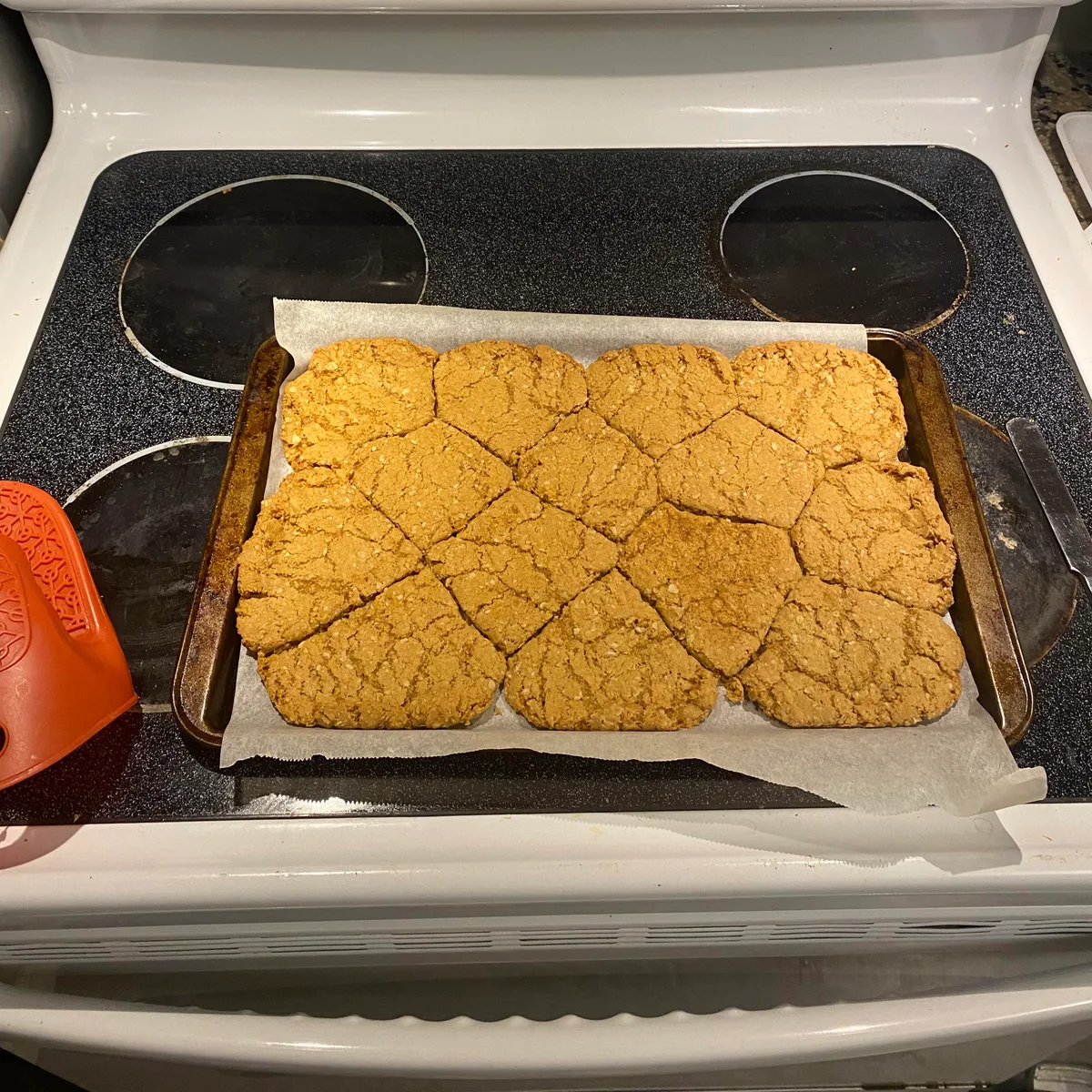
Image source: Web (Bing) / reddit.com (Web image (fair-use with source credit))
- Crowding the tray. Four cookies fit comfortably. Six is the absolute max. Any more and the air can't reach each one.
- Using the air fry function instead of bake. Air fry mode blasts food with maximum airflow. That's perfect for crispy fries. It's terrible for soft cookies.
- Skipping the preheat. Cold heating elements bake slower on the first batch. Your second batch will differ from your first.
- Parchment paper hanging over the edge. That paper can touch the heating element and catch fire. Trim it so it sits flush with the tray.
- Opening the door every 30 seconds. Each open loses heat and extends the bake time. Trust the timer and check once, maybe twice.
- Baking from a warm kitchen on a hot day. Room temperature dough is your enemy. A quick chill always helps.
Raw dough needs careful handling too. The USDA warns against tasting raw cookie dough because flour can carry bacteria. Their safety guidance for baking basics explains the risks clearly.
If you're baking from pre-made frozen dough, the same timing logic applies to other frozen items that cook fast. Small portions let you adjust your approach before committing to a full batch.
Pro Tips for Chewy Centers and Crispy Edges
The air fryer toaster oven rewards one thing above all: controlled spread. Chewy centers come from dough that sets before the heat pushes outward. Crispy edges come from the fan doing its job.
Use a mix of sugars. Brown sugar holds moisture. That makes the center softer. White sugar promotes spread and crispness.
A two-to-one ratio of brown to white gives you both textures.
Press a few chips on top before baking. You'll get visible chocolate pools on the surface instead of chips buried in the dough. It looks better and tastes more chocolate-forward.
Rest the finished cookies on a wire rack, not the tray. The tray holds residual heat. That continues cooking the bottoms and steals their softness. Two minutes on the tray is plenty.
Add a tablespoon of cornstarch to your dry mix. It's a common trick that tenderizes the crumb. You're less likely to get that dry, dense texture that plagues small-batch air fryer cookies.
Match your bake mode to your texture goal. A standard convection bake setting produces a softer, more traditional cookie. Some toaster ovens offer a "pastry" or "bake" preset that cycles the heat differently. Those tend to bake more evenly for desserts.
If you're still struggling with uneven results, compare the exact differences between full-size convection ovens and these countertop units. Understanding the heat source helps you debug any kitchen appliance, not just this one.
When Not to Use an Air Fryer Toaster Oven for Cookies
This method shines for a single dozen or less. It's not a replacement for a full-size oven when you need 24 cookies for a school bake sale.
If you're baking more than six cookies at once, the small chamber becomes a problem. You'll end up running three or four batches. Each batch bakes differently because the oven heats up more with each cycle.
Thick, giant bakery-style cookies are also tricky. They need gentle heat to rise before the edges set. The forced air can fix the surface too quickly and leave the middle raw.
Some units lack a dedicated bake mode. If yours only has an air fry setting, you'll get aggressive airflow and uneven results. Consider whether that matches your expectations before committing to a full batch.
For large loads, a conventional oven or a standalone toaster oven with no air fry function might serve you better. If you're comparing countertop designs, our breakdown of air fryer vs air fryer toaster oven covers the key differences. And for other small-batch bakes, the same logic that works for biscuits in an air fryer applies here.
Quick FAQs
Can I use the air fryer setting instead of bake?
No. Air fry mode blows harder and speeds up browning. That leads to burnt bottoms and pale tops.
Use the bake or convection bake function if your unit has one. If you only have air fry mode, lower the temperature to 315°F and shorten the bake time.
Why do my cookies burn on the bottom?
The tray sits too close to the bottom element, or the temperature runs hot. Add a second layer of parchment paper. Reduce the temperature by 10 degrees.
Rotate the tray halfway through. Check the underside on the second batch to confirm the fix.
How many cookies fit in an air fryer toaster oven?
Typically four to six, depending on the tray size. Keep at least two inches between dough balls so the air can reach each cookie. Overcrowding blocks airflow and causes uneven baking.
Do I need to preheat?
Yes. Preheat for a full five minutes at 325°F. A cold oven bakes the first batch slower than the second.
The difference is noticeable in texture and color.
Can I bake frozen cookie dough directly?
Yes. Place frozen dough balls on the lined tray and add three to five minutes to the bake time. Keep the temperature at 325°F so the centers cook through without burning the edges.
If you're unsure about handling raw dough, the USDA's food safety guidance explains the risks clearly.
Final Decision Guide: Your Go-To Small-Batch Cookie Plan
Here's the workflow that works most reliably across unit sizes.
- If you want thin and crispy cookies: room-temperature dough, 325°F, 8 to 9 minutes.
- If you want thick and chewy cookies: chilled dough, 325°F, 9 to 11 minutes.
- If you want even browning: rotate the tray at the halfway mark.
- If you want a soft center: pull the cookies when the middle still looks slightly underdone.
- If you're using frozen dough: add three to five minutes and check early.
Trust your eyes over the timer. The perfect air fryer toaster oven cookie has deep golden edges, a soft center, and a few pools of melted chocolate on top.
When you understand the fan and the heat, you'll get consistent results. Start with the cheat sheet, adjust for your machine, and you'll nail it within two batches.